Showing posts with label HCPCS 2013. Show all posts

Sunday, 24 March 2013

CPC Practice Exam Sample Questions


Example 1: Medical Terminology
The term "Salping-Oophorectomy" refers to

a. The removal of the fallopian tubes and ovaries
b. The surgical sampling or removal of a fertilized egg
c. Cutting into the fallopian tubes and ovaries for surgical purposes
d. Cutting into a fertilized egg for surgical purposes

Rational

Answer: A

The term "salp" means tube, the term "ooph" refers to the ovary, and the suffix "ectomy" means to surgically remove. Some CPT books (like the professional edition put out by the AMA) contains pages with common medical terms like these in the beginning of the book (prior to the coding guidelines)

Example 2: Musculoskeletal

OPERATIVE NOTE

PREOPERATIVE DIAGNOSIS: myelopathy secondary to very large disc herniations at C4-C5 and C5-C6.

POSTOPERATIVE DIAGNOSIS: myelopathy secondary to very large disc herniations at C4-C5 and C5-C6.

PROCEDURE PERFORMED:
1. Anterior discectomy, C5-C6
2. Arthrodesis, C5-C6
3. Partial corpectomy, C5
4. Machine bone allograft, C5-C6
5. Placement of anterior plate with a Zephyr C6

ANESTHESIA: General
ESTIMATED BLOOD LOSS: 60 mL
COMPLICATIONS: None

INDICATIONS: This is a patient who presents with progressive weakness in the left upper extremity as well as imbalance. He has a very large disc herniation that came behind the body at C5 as well and as well as a large disc herniation at C5-C6. Risks and benefits of the surgery including bleeding, infection, neurologic deficit, nonunion, progressive spondylosis, and lack of improvement were all discussed. He understood and wished to proceed.

DESCRIPTION OF PROCEDURE:
The patient was brought to the operating room and placed in the supine position. Preoperative antibiotics were given. The patient was placed in the supine position with all pressure points noted and well padded. The patient was prepped and draped in standard fashion. An incision was made approximately above the level of the cricoid. Blunt dissection was used to expose the anterior portion of the spine with carotid moved laterally and trachea and esophagus moved medially. I then placed needle into the disc spaces and was found to be at C5-C6. Distracting pins were placed in the body of C6. The disc was then completely removed at C5-C6. There was very significant compression of the cord. This was carefully removed to avoid any type of pressure on the cord. This was very severe and multiple free fragments noted. This was taken down to the level of ligamentum. Both foramen were then also opened. Part of the body of C5 was taken down to assure that all fragments were removed and that there was no additional constriction. The nerve root was then widely decompressed. Machine bone allograft was placed into C5-C6 and then a Zephyr plate was placed in the body C6 with a metal pin placed into the body at C5. Excellent purchase was obtained. Fluoroscopy showed good placement and meticulous hemostasis was obtained. Fascia was closed with 3-0 Vicryl, subcuticular 3-0 Dermabond for skin. The patient tolerated the procedure well and went to recovery in good condition.

a. 22554, 63081, 63082, 20931, 22845
b. 22551, 63081, 20931, 22840
c. 22551, 63081, 63082, 20931, 22845
d. 22554, 63081, 20931, 22840

Rational:

Answer: A

Per. Paul Cadorette and the American Medical Association article titles, "Coding Guidance for Anterior Cervical Arthrodesis", "When a spinal fusion (arthrodesis) is performed, the first thing a coder needs to recognize is the approach or technique that was utilized. With an anterior (front body approach)to cervical fusion the incision will be made in the patient's neck, so the key terms to look for are platysma, esophagus, carotid, and sternocleidomastoid. These structures will be divided and/or protected during dissection down the vertebral body. After dissection, the procedure can proceed on one of three ways:

1) When the interspace is prepared (minimal discectomy, perforation of endplates) then 22554 would be reported.

2) When a discectomy is performed to decompress the spinal cord and/or nerve root(s) report 22554 for the arthrodesis along with 63075 for the discectomy procedure.

3) When a partial corpectomy (vertebral body resection) is performed at C5 and C6 report CPT code 22554 for the arthrodesis with 63081 and 63082. Two codes are reported because the corpectomy procedure is performed on two vertebral segments (C5 and C6). CPT codes 63081-63091 include a discectomy above and/or below the vertebral segment, so code 63075 (discectomy) would not be reported if performed at the C5-C6 interspace.

Once the decompression procedure has been completed, a PEEK cage can be placed within the interspace or a structural bone graft can be fashioned to fit the vertebral defect created by the previous corpectomy. Insertion of the PEEK cage would be reported with a biomechanical device code 22851. This code is only reported one time per level even if two cages are placed at C5-C6. When a structural bone graft is used, determine whether it is an allograft (20931)) or an autograft (20938). The bone graft codes are only reported one time per procedure and not once for each level. Finally, the physician will place an anterior plate with screws (22845) across the C5-C6 interspace to stabilize the area fusion".

Some guidance on coding such procedures can also be located in the Spine (vertebral column) coding guidelines (above code 22010).

Example 3: ICD-9-CM

Jim was at a bonfire when he tripped and fell into the flames. Jim sustained multiple burns. He came to the emergency room via an ambulance and was treated for second and third degree burns of his face, second degree burn on his shoulders and forearms, and third degree burns on the fronts of his thighs.

a. 941.20, 841.30, 943.25, 943.21, 945.36, 948.42, E897
b. 941.30, 943.29, 945.36, 948.42, E897
c. 941.09, 943.09, 945.09, 948.64, E897
d. 941.30, 943.29, 945.36, 948.64, E897

Rational

Answer: B

Burn codes always have no less than three codes: A burn code, a total body surface area code (948.XX), and an E code. You can have more than three codes but never less. Burn codes have the following rules (which can be found at the beginning of the ICD-9 book under general guidelines), always code one location to the highest degree (Ex. 1st and 2nd degree burns on the arm, only code 2nd degree). When sequencing burn codes always list the highest degree first (Ex. 1st degree burns to the face and 3rd degree burns to the arm. List the arm burn first and then the face burn). Answer B is the answer because its codes describe the highest degree burn to each anatomical location, it sequences the burn codes in order of highest to lowest degree burns, the 948 (TBSA code) has the correct calculation, and the E code correctly describes the bonfire incident.

Example 4: Anesthesia

When does anesthesia time begin?

a. After the induction of anesthesia is complete
b. During the pre-operative exam prior to entering the OR
c. When the anesthesiologist begins preparing the patient for the induction of anesthesia
d. Once the supervising physician signs over the patient's care to the anesthesiologist

Rational

Answer: C

The answer to this question can be located in the anesthesia coding guidelines under the title "Time Reporting"

It's time to STOP doing what's not working, and get the CPC Practice Exam - fully updated in 2013!


Contents of the practice exam:

  • 150 Question CPC Practice Test
  • Answer Key, With Full Rationale
  • Scan Tron Bubble Sheets
  • The Exam Study Guide, including:
    Common Anatomy Terminology Handouts
    Common Medical Terminology Prefix, Root Word, and Suffix Handouts
  • The Official AAPC Proctor-to-Examinee Instructions (read out loud on the day of the exam)

AAPC's CPC exam is 150 questions long. Questions range from true and false, to 1-2 sentences, to full page operative notes.

Questions on the CPC exam do not cover just specific medical codes. Questions can be very diverse, testing the examinees knowledge on:

  • Coding Guidelines
  • Understanding of Conventions
  • Correct Modifier Use
  • Bundling and Global Packages
  • Medical Terminology and Gross Anatomy


We have taken into account the wide spectrum of diversity the CPC exam offers and have constructed the questions on our CPC Practice Exam to reflect those on the actual exam as closely as possible.


**We'd like to thank MTSamples.com for providing some of the dictation for our operative report questions as well as the ASC Review for their coding guidance article by the American Medical Association.**

Pharmacy Technician Training & Orientation Course


RXinsider’s Pharmacy Technician Training & Orientation is a no-nonsense training program for anyone interested in a career within the pharmacy profession. The program focuses on basic skills and understanding while minimizing training burdens on the existing pharmacy staff. RXinsider’s Pharmacy Technician Training & Orientation is the perfect starting point for cross-training front store pharmacy personnel, training new pharmacy staff or self-directed training for individuals interested in becoming a pharmacy technician.

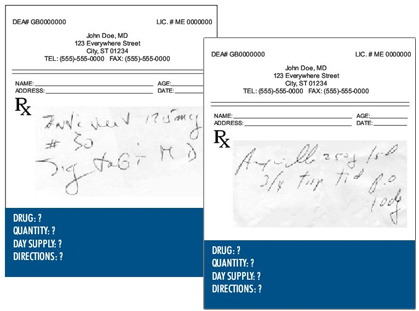
Can you decipher the following prescriptions?
 
Can you read the drug names?
Can you calculate how long the prescription should last?
Can you read the directions?

…you will after completing RXinsider’s Pharmacy Technician Training & Orientation program.


  • Four comprehensive and relevant modules
  • Unlimited online access 24/7
  • Assessment quiz & certificate of completion
  • Web-based
  • Affordable investment


By completing the training program, trainee should:

  • have an idea of what a typical Pharmacy Technician's duties will entail.
  • gain general and basic knowledge of a typical retail pharmacy and its operations.
  • feel less overwhelmed and stressed during the first few weeks of employment.
  • prove to future employers their commitment to becoming part of the pharmacy team.
  • gain an edge on any other applicants for a particular pharmacy position.
  • save time and frustration during the in-store training process.
  • determine whether a career in pharmacy may be the right fit.
  • NOTE: This program is NOT intended as a study guide for the PTCB Exam.


  1. General Pharmacy Information
  2. Sig Codes/Abbreviations
  3. Brand-Generic Name Recognition
  4. Prescriber Handwriting Recognition + Day’s Supply Calculations
  5. Self-Assessment Quiz
To Join Pharmacy Technician Training & Orientation Course Click Here

Electronic Medical Record (EMR) Software and Practice Management Software Suite

Electronic Medical Record (EMR) Software and Practice Management Software Suite, E-PracticeSoft Professional, Patient Scheduling, Medical Billing All in One, Windows PCs Only


Easy-to-use yet powerful combination of EMR Software and Practice Management Software for medical offices in one Program. Features Multiuser administration and staff password protection, Managing various Roles and Permission for privacy and security. Advanced multi Document management and handling Drug Groups, names, dosages, quantities, administration and frequencies and easy patient assignment Insurance Company / Providers Easy check, maintenance, storage and retrieval Includes calendar, patient appointment scheduler, events, daysheets, easy to input provider appointments Detailed Patient Demographics with advanced storage, search and retrieval features. Store patient: name, address, phone numbers, emails, assigned doctors, reference, significant dates, photos, insurance information, gender, emergency contacts, notes, relevant security info (mothers maiden name), occupation, smoking status, Easy to input and search patient consultation notes, assigned medications, allergies, drug prescriptions, Diagnosis, surgery history, family history, progress notes, problems, medications, past/current medical history, immunizations, laboratory data, radiology reports and clinical summaries. Drugs Management: Drug Groups, Drug Names, Quantities, Dosage, Administration, Frequencies. Easily perform drug-drug, drug-allergy checks. User defined reports, print/email statements Patient Management: Drug Prescriptions, Patient Documents, Patient Appointment / Schedule All information easily updatable and editable. Easy invoicing, payments and product management Windows PCs Only: Windows 95/98/ME/NT/2000/2003/XP/Vista/7 Free Unlimited email support included
Product Features
  • Easy-to-use yet powerful combination of EMR Software and Practice Management Software for medical offices in one Program.
  • Multiuser administration and staff password protection, Managing various Roles and Permission for privacy and security.
  • Advanced multi document management and handling Calendar, patient appointment scheduler, events, daysheets, easy to input provider appointments
  • Drugs Management: Drug Groups, Drug Names, Quantities, Dosage, Administration, Frequencies. Easily perform drug-drug, drug-allergy checks.

Electronic Medical Record (EMR) Software and Practice Management Software Suite, E-PracticeSoft Professional, Patient Scheduling, Medical Billing All in One, Windows PCs Only

Insurance & Technology Magazine


Product Details

  • Format: Magazine
  • Shipping: Currently, item can be shipped only within the U.S.
  • Publisher: CMP Media, Inc.
  • ASIN: B000079882
Insurance & Technology Magazine

Friday, 22 March 2013

The Medical Coding Certification Review Blitz Videos

Introducing:
The Medical Coding Certification Review Blitz Videos


Immediate Online Access Videos:
12 hours of CPC Exam Review and Exam Tips


Updated for 2013: How to Pass the CPC Exam
On Your Very Next Try-
Without Fear, In The Required Time,
And With Ease… Guaranteed!


Bonus for 2013:
7 DVD’s Delivered to Your Home or Office

cpc exam- medical coding certification-review-dvd


My medical coding video review program prepares you for the following exams:
  • Certified Professional Coder (CPC) exam by the American Academy of Professional Coders (AAPC) and the
  • Certified Coding Specialist-Physician Based (CCS-P) exam by the American Health Information Association (AHIMA).
This is both a review of the subject matter and a guide to doing well on the exam. You will not only have an exhaustive review of all the various diagnostic and therapeutic procedures covered on the exam, the program will also demonstrate ways to go through the process of taking the exam in the most efficient manner, making best use of the time allowed. Since this is an open-book exam, the program teaches you my proprietary “bubbling and highlighting technique.” This technique demonstrates how to mark and highlight your coding manual to make it easier to choose the correct answer of the choices given for any question on the exam. You’ll see how to best manage some questions you might find more difficult than others.

It includes:

12 Hours of Streaming Videos ONLINE Available Immediately

2013 Bonus: CPC Exam Training Videos Also on DVD!


Streaming videos


DVD’s


01 Introduction to the program
02 Medical Terminology CPC Exam Prep
03 HCPCS CPC Exam Prep
04 Modifiers CPC Exam Prep
05 ICD-9 CPC Exam Prep
06 E&M Section CPC Exam Prep
07 Anesthesia Section CPC Exam Prep
08 Radiology Section CPC Exam Prep
09 Path & Lab Section CPC Exam Prep
10 Medicine Section CPC Exam Prep
11 Integumentary System CPC Exam Prep
12 Musculoskeletal System CPC Exam Prep
13 Respiratory System CPC Exam Prep
14 Cardiovascular System CPC Exam Prep
15 Digestive System CPC Exam Prep
16 Urinary System CPC Exam Prep
17 Genital System CPC Exam Prep
18 Endocrine/Nervous System CPC Exam Prep
19 Eye/Ear System CPC Exam Prep

And the following bonuses!


CPC-Exam-coding-certification.org_bubbleandhighlighting CPC-Exam-coding-certification.org_phonesupport CPC-Exam-coding-certification.org_monthlywebinar CPC-Exam-coding-certification.org_YahooGroups

Monday, 15 October 2012

HCPCS 2013 Level II Expert (Hcpcs Level II Expert

December 31, 2012 160151669X 978-1601516695 2013


This title has not yet been released.
You may pre-order it now and we will deliver it to you when it arrives.
Ships from and sold by Amazon.com. Gift-wrap available.


Accurately report supplies and services for physician, hospital outpatient, and ASC settings with the Ingenix HCPCS Level II Expert. Use this comprehensive reference for the HCPCS code set that focuses on management of reimbursement.
This user-friendly book will guide any coder confidently through current modifiers, code changes, additions and deletions with information as dictated by the Centers for Medicare and Medicaid Services (CMS). Key Features: Medically Unlikely Edits (MUEs) appendix. Improve accuracy of claims by ensuring compliance with the CMS program through easy access to codes and their associated MUE units. National average payment tables. Access information to improve claim accuracy and ensure proper reimbursement. Expanded index. Ease code look-up with additional ways to locate codes. Glossary of terms. Increase your understanding of HCPCS codes to improve coding accuracy. Special appendixes. Get additional information with appendixes for the National Average Payment Table for HCPCS and MUEs; listing of PQRS codes; also includes an appendix with a deleted codes crosswalk. Most complete HCPCS code set available. Find information on codes from sources that generates HCPCS codes, including CMS, OPPS addendum B, and the physician fee schedule. Table of Drugs. Locate both generic and brand-name drugs and their corresponding codes based on the amount and route of administration. Additional Features: PQRS icons APC status indicators and ASC designation symbols. DMEPOS icon In-depth illustrations AHA Coding Clinic for HCPCS references Color-coded bars and icons User-friendly appendixes. Navigate additional information easily with structured references and excerpts, including the National Coverage Manual and other Pub. 100 references.
 
HCPCS 2013 Level II Expert (Hcpcs Level II Expert (Spiral))

Wednesday, 23 November 2011

Certified Coding Associate (CCA) Exam Preparation

Certified Coding Associate (CCA) Exam Preparation

Certified Coding Associate (CCA) Exam Preparation [With CDROM] (AHIMA Exam Preparation)
provides ICD-9-CM and CPT® practice you need to face the CCA certification exam with confidence. The practice exams and practice questions included on the accompanying CD-ROM simulate the exam experience and provide opportunities to apply your knowledge and skills.
CCA Exam Preparation includes general exam information and covers the following CCA domains:

  • Domain 1: Classification Systems
  • Domain 2: Reimbursement Methodologies
  • Domain 3: Health Records and Data Content
  • Domain 4: Compliance
  • Domain 5: Information Technology
  • Domain 6: Confidentiality and Privacy
Key Features:
  • Includes 500 multiple choice questions organized by the CCA domains
  • Answers include rationales and references to enhance learning
  • CD-ROM provides simulated exam experience:
    • 200 practice questions organized by the CCA exam domains
    • Three timed, self-scoring practice exams that can be run in practice and exam simulation mode
  • CCA domains and tasks are revised in this edition
About the Editors: Dorine Bennett, MBA, RHIA, FAHIMA is associate professor and director of the HIM programs at Dakota State University. Kathy Dorale, RHIA, CCS, CCS-P is the vice president of health information management at Avera Health in Sioux Falls, South Dakota.

Tuesday, 11 October 2011

ICD-10-PCS Coder Training Manual, 2013


ICD-10-PCS Coder Training Manual 2013


Price : $92.95
Product # : AC207811
Learning Category: Coding and Reimbursement
ISBN # : 9781584262886
Publisher : AHIMA Press
Copyright : 2012
Experienced ICD-9-CM coders trained by AHIMA-certified ICD-10-PCS trainers can use this manual to build their knowledge of ICD-10-PCS. In addition to a textual adaptation of AHIMA’s “ICD-10-PCS Overview: Deciphering the Code,” a distance education course that is a prerequisite to AHIMA’s ICD-10 Academies, the manual contains references to and explanations of ICD-10-PCS coding guidelines and conventions. It provides ICD-10-PCS coding exercises at the beginning, intermediate, and advanced level.These exercises emphasize all aspects of the coding classification system to allow students to apply their knowledge of coding principles and definitions. Answers are also provided.

Authors: Ann Barta, MSA, RHIA, Kathryn DeVault, RHIA, CCS, CCS-P, Ann Zeisset, RHIT, CCS-P, CCS

To order, visit the Web Store: Use Coupon Code CP53408962 to receive a 15% discount.

About the Authors
Ann Barta, MSA, RHIA, Professional Practice Resources Specialist, provides professional expertise on ICD-10 issues. She is responsible for the development and presentation of educational materials on ICD-10-CM/PCS. In addition, she serves as faculty and content developer for the AHIMA Academy on ICD-10-CM/PCS.
Kathryn DeVault, RHIA, CCS, CCS-P, Professional Practice Resources Practice Manager, provides expertise on professional practices issues related to coding and reimbursement. She also authors materials for and supports AHIMA online coding education and is a technical advisor on CDI, RAC, ICD-9-CM, and ICD-10-CM/PCS, and CPT publications. In addition, she serves as faculty and content developer for the AHIMA Academy on ICD-10-CM/PCS.
Ann Zeisset, RHIT, CCS-P, CCS, Professional Practice Resources Practice Manager, provides professional expertise to AHIMA members, the media, and outside organizations on practice issues related to coding and reimbursement. She supports and authors material for AHIMA online coding education and is a technical advisor on ICD-9-CM, ICD-10-CM/PCS, and CPT coding publications. In addition, she serves as faculty and content developer for the AHIMA Academy on ICD-10-CM/PCS.
ICD-10-PCS Coder Training Manual 2013

Monday, 26 September 2011

Medical Billing and Coding Program

If you are the edge of looking for a reputable educational institution to pursue your interested career of medical coding program, be sure that you opt for the one that has been certified by the American Health Information Management Association (AHIMA). For those that are offering degree programs, you should look for the accreditation of the institutes with the Commission on Accreditation for Health Informatics and Information Management Education (CHIIM). This authoritative board is responsible of probing into the variety of programs to achieve a minimum set of requirements for extensive training.

In most of the medical coding schools or colleges, they offer programs that merge the medical coding and medical billing in an item as both the professions are naturally similar in the courses. Although the program is positioned at an entry-level, the career of medical coding is not probably an easy prey to fall for. It often emphasize on the merging of computer software, hospital and insurance policy, medical knowledge, web applications as well as certain extent of ethics related to medicinal records. Basically the aim of this program is to prepare students for future career and employment as medical coders or billers, regardless of either in the location of a home office or medical setting.

Medical Billing

Certainly, a qualified medical coding program will provide you with better qualifications to penetrate into the medical coder’s world with greater confidence. While the program may appear to be quite hectic, most schools or colleges will offer the courses in a flexible schedule and off-campus online programs for working students. Students enrolled in the program should expect to take up classes of subjects including medical coding, physiology, medical terminology, statistics, health information law, anatomy and accounting, among the many others.

Apart from the ordinary coursework, almost all medical coding schools will shape the program for students to seek hands-on experience through the externship in a doctor’s office or in hospitals. Usually the externship program will last for approximately 40 hours a week for a couple of weeks and they are often not paid. However, the seizure of this golden chance can build a valuable career connection for students in the future.


Medical Billing And Coding - A Career For You

Today medical billing and coding has become an important career option in the medical field. It is not a job that can be carried out by just anyone. It requires proper training and practice.

There are many online medical billing courses as well as coding courses. There are also medical coding schools where interested persons can enroll and get a medical coding degree. Most of these places also offer courses in medical billing as the two go hand in hand. There are many websites on medical billing and coding online that provide details about online medical coding courses and how much it costs to learn medical coding and billing. These sites also offer advice on how to pay for medical billing courses in school. They offer information on medical coding as a career, how to start a business and provide a general outlook on medical insurance billing jobs.

Medical Billing

What Is Medical Coding Or Billing?

The job of the medical billing and coding personnel may sound very simple. However, even one small mistake can lead to grave results. These jobs can be done from a clinic or hospital or office and there are even home based jobs. In fact, medical coding and billing from home is becoming quite popular. However, many people do not know what is medical coding or billing. Medical coding is the process of giving specific non repetitive codes to medical diagnosis. This is mainly done for medical insurance purposes. It requires well trained coders to convert the diagnosis provided by the doctor into codes. These can be used by insurance companies to give compensation to the patient by way of paying his medical bills.

Medical billing can be considered a sister vocation to medical coding. It is done after the coding is completed. It is data that passes between the hospital or clinic and the insurance company. The biller’s job is to convert the code into bills which will be given to the insurance company. This is done electronically through a clearing house set up for the purpose. The insurance company pays out the claim based on the details sent in by the biller.

Salaries Are Impressive

Careers in Medical billing and coding are extremely popular, especially to those who wish to work out of their homes. This is mainly because the salary is pretty impressive. In fact, there is a major difference in salaries paid to those doing the job as a freelance service and those carrying it out from the office of a hospital or a doctor. The at home service is generally on contract basis and the net amount paid is a great deal higher than what a normal full time employee would get. The job timings are also flexible when working from home. The flexibility of the job and the great salaries offered in the medical coding field make it a much sought after profession especially by homemakers who want to earn sitting at home.

Medical billing and coding is a great career for anyone who wants to be at home with kids and yet make some money provided they undergo the necessary training.


Medical Billing - Common On The Job Problems

If you’re thinking of becoming a medical biller for a medical billing company, there are some things that you might want to know about some common problems before you decide to take the job. This is a very stressful career choice and if you don’t know what you’re getting yourself into, you could end up regretting it for the rest of your life. What follows are just some of the common problems and there are a lot more.

One of the biggest problems you’re going to run into as a medical biller is patient complaints. You have to understand something. These people are usually very poor and need to have their medical bills paid by the carrier. When things don’t go right and they’re not reimbursed for their prescription or whatever right away, the first thing they are going to do is call you and complain. And this goes on all day in addition to your regular billing duties of trying to get the bills out.

Medical Billing

And what about those duties, when you actually get the chance to do them? The medical billing software that is absolutely perfect and problem free hasn’t been invented yet. You are going to run into problems with corrupted data, programs that don’t work, modems that stop functioning when trying to submit a claim electronically, down phone lines and a number of other technical problems. Your computer will become your worst enemy at the worst time.

And what about dealing with the insurance carriers? This is probably the worst part of the whole job because unless you’re dealing with private insurance, where they have to care about their customers or they lose them, you’re dealing with government agencies who just don’t care. So if you have a disputed claim and what to get it paid fast, you’ve got a long wait until that claim is adjudicated. Sometimes it can be months before it is settled. This makes for a very unhappy patient, which in turn makes for a very unhappy worker when those calls start coming in.

And then there is all the legal red tape. The medical billing industry in the United States is one of the most regulated. You can’t turn around without running into some kind of regulation that hinders the work that you do. Keeping track of all the different forms that go along with these regulations is a nightmare. Better have a checklist near your desk of all the forms and when you’ll need them because there is no way to keep all that stuff in your head.

And if all that isn’t enough, you have to deal with the company you work for. They are in the business of medical billing to make money and that means doing your job quickly. It’s now how good you do it but how fast. In other words, quantity of quality. It’s the number of claims you process, period. This is a very stressful way to work, especially when you have so many outside factors slowing you up.

So if you’re thinking about getting into the medical billing field, you might want to reflect on some of these problems first.


Medical Billing - Insurance Carrier Perspective

Everybody has their own point of view on every subject. In this world, our point of view, at least in our minds, is the right one. Well, that is no different in the world of medical billing. The patients think they should be paid for the claims, the medical billing companies want the patients to get paid for their claims so they can make their money and certainly the doctors want the patients to get paid for their claims or they’ll go to another doctor. But what about the insurance carriers? It seems that they are the last people who want to pay claims. Well, this is for a very good reason. While everybody else is getting paid, the insurance carriers are paying out.

Sure, these carriers also get a monthly premium from somewhere, whether it be from us poor workers if they are a government agency or from the patients themselves if they are a private insurance company. But the truth is, especially with government run agencies, the money coming in is far less than the money going out. That is why the United States Medicare and Medicaid programs are in such trouble and in danger of going broke. Medical costs are skyrocketing because doctors are charging more and more for services, but the common worker doesn’t make enough to put into the fund to make up for these increases.

Medical Billing

As for private insurance companies, they have an even bigger problem. Whereas the government agencies can work at a loss because they’re non-profit, the private insurance companies have to show a profit to their stockholders. Otherwise, the company goes out of business. This makes it so that they are even more reluctant to pay out claims. This however, is a real catch 22. See, the people they are paying the claims to are the people who are providing them with their income in the form of insurance premiums. So if they’re not being paid, they’re going to take their business elsewhere. Talk about a no win situation for a private insurance company. That’s why so many of them have gone out of business over the last 30 years. Even the big giant Prudential has had its problems.

Because of these concerns, the insurance carriers have to be very careful about paying out claims. They have to research each one carefully to make sure the claim itself is legit. This will ultimately slow up the process, which is what medical billing companies and patients end up complaining about. But the truth is, there are a lot of bogus claims out there and if these insurance carriers paid out on all of them, they’d be broke sooner than you can say “I’ve fallen and I can’t get up”. So it is understandable that these insurance carriers run their businesses the way they do.

The point of this article is to give these carriers a little slack if you’re a patient or a medical billing company. Remember, without them, you wouldn’t have a job and would have to pay for your medical bills out of your own pocket.


Medical Billing and Coding Job Description, Training and Salary

If you’ve been thinking about taking some medical coding or medical billing classes online or getting medical coding or billing training you want to make sure you understand what this career and the job entails and have a good idea what kind of salary you’ll make. Of course you may want to open a work from home business and it’s certainly possible but may require a good education and training and an entrepreneurial ability to do so.

Going into a home business is not for everybody and getting on the job experience first is a good idea unless you have extensive education and feel like you completely understand the billing business.

Medical Billing

Medical billing means you would be documenting patients’ visits to a doctor, clinic or hospital or other type of health facility. Medical billers, assistants or Specialists enter clinic and patient information into expensive billing or practice management software so you can submit medical claims to health insurance companies. You would also be posting payments from insurance carriers and patients and run off management reports. You may also be required to make follow up calls.

Medical billing doesn’t have to be done in a doctor’s office. You can do billing from home, any office, clinic or hospital, billing service or facility that has the necessary software. Many doctors outsource their billing and may choose a home based business if the service is competitive in terms of cost. Or they may choose a smaller service and not necessarily one of the large billing services. So cost is a factor.

Medical coding is a totally separate function and not a part of the medical billing business. Medical coding cannot be done from home or outsourced to a service. Medical coders usually work right in the doctor’s or clinic’s office doing the coding before it is sent on to the billing service. Coder’s salaries are comparable to medical biller’s salaries.

So if you decide to get medical billing training you don’t have to worry about coding and vice versa. People usually choose one or the other. Medical billing is more popular and offers more versatility since you can work from home in either your own business or for a doctor or clinic that allows you to do that.

Billing services often have graveyard shifts and may run around the clock. Salaries to start out run at least an hour and up depending on your training, education and or experience, or related experience. You can move up fast as you gain the experience on the job and can command a much higher salary for the experience you’re getting both from the clinic, practice or company you’re working for when and if you leave for another medical billing job.

You don’t need national certification, for example, as a billing specialist but it may help you get your foot in the door faster. There is money available for both your local on-campus and online medical billing training too. Make sure to check out online schools thoroughly to avoid any scams.


Medical Billing - Records Hierarchy

Medical billing, depending on whether you are billing paper claims or electronically, is a totally different animal for each. Electronic claims have one thing that paper claims don’t have. And while they pay faster, thus the reason for billers to bill electronically, they can also be a royal pain in the backside because of all the restrictions and requirements. One of the strictest of these requirements is claim records hierarchy. We’re going to briefly explain that hierarchy in this installment, as a detailed explanation will probably leave you confused and running for the nearest exit.

If you’re billing claims by paper you simply take each paper claim, stick it in an envelope and leave it in the hands of your trusted mailman. Not so with electronic claims. Not only does the envelop of electronic claims have to be properly addressed, but it better have every piece of paper in just the right place and totals for everything from how much you’re billing to how many pieces of paper you have. The key to all this is that it all has to be in a certain order.

Medical Billing

To simplify this process, think of your claim file as a wrapper for sticks of gum. Each individual stick of gum is a record specification such as your CA0, DA0, EA0, FA0, G and H records. These are your records for each individual patient. Any claim file can have as many patients as you like stuffed into it. This means that you can have an infinite number of C, D, E, F, G and H records. However, each patient’s records must all be together. So, to keep this simple, if you have two patients in your file, you would have their records transmitted in this order; C, D, E, F, G and H records for patient 1 and then C, D, E, F, G and H records for patient 2. If a C record from patient 2 ends up falling with the C, D, E, F, G or H records from patient 1 then the whole batch will fail and nothing will get paid.

But, this isn’t the end of it. For each patient, there is a trailer record. The trailer record for the patient is the XA0 record. This record gives the totals for that particular patient. So there needs to be an X record for patient 1 and one for patient 2. This record MUST come after the H record of each patient. Then, there is a trailer record for the batch, which is all the patients submitted in the batch. This is the YA0 record and MUST come after the last X record in the batch.

Finally, we have the outer wrappers, which are the AA0 and BA0 records at the beginning of the file and the ZA0 record, which is the file record trailer at the end of the file. This record gives the totals for every record in the whole claim file. So the whole hierarchy for a two patient claim file would have the following record series, AA0, BA0, CA0, DA0, EA0, FA0, G record, HA0, XA0, CA0, DA0, EA0, FA0, G record, HA0, XA0, YA0, ZA0.

If these records are not transmitted in exactly this sequence, the whole file will be rejected. Obviously, this is quite simplified as there can be multiple items and payers for each patient. But you get the general idea.

When it comes to medical billing, records hierarchy can be a real nightmare, especially if it’s not done correctly.


Basics of Medical Billing


Whether you are planning on starting a medical billing business, already own a medical billing business, work for a billing service or in a medical office, it is crucial that you completely understand the entire billing process. From the time a patient schedules an appointment to the time that full payment is received, everyone who interacts with either the patient or the billing process can affect the payment.

Billing is such an important part of a medical office. The money brought in from the billing is what keeps the office running. It pays everyone’s salary, including the doctor. It always amazes me that so many providers do not make sure that their billing is being done properly and that their office staff isn’t all working together to make sure all is being done that needs to be.

Medical Billing

When a patient calls to schedule an appointment it is important that the person doing the scheduling not only gets all of the necessary information from the patient but also that they understand how insurance works so they can tell if anything needs to be done prior to the patient’s appointment. Having someone who understands medical billing can reduce visits that end up not being covered by insurance.

The person responsible for actually submitting the insurance claims needs to know the different requirements by each carrier and understand how to handle all aspects of billing. Following up on unpaid insurance claims is an area that most offices lose a ton of money. If you don’t have a very good follow up system then you are definitely losing money.

Many medical providers think that only the billing person needs to understand medical billing. Actually it is important that all staff have some knowledge of insurance billing in order for things to run smoothly. The more that the staff understands, the less money you throw out the door. Providers deserve to be paid for all the patients they treat.

Medical Claims Processing - Billing Software, Home Business

Some facilities employ medical billers and coders. Other facilities employ individuals who handle both aspects of the claim process simultaneously. A medical biller and coder will generally earn more than a medical biller or coder does. That is because he or she is performing double duties and eliminating the need for the health care facility to hire two different people.
Medical coders provide the diagnostic codes and procedure codes that apply to the patient’s visit. If the codes do not match, a claim may be denied. The insurance company will more than likely say that the treatment was not medically necessary. That is why it is so important for a medical coder to be precise.
A medical biller obtains the correct codes from the medical coder. He or she uses the codes to fill out a claim form. The claim is submitted to the insurance company, generally in the form of an electronic claim. It is important that the medical biller comply with the requirements of each insurance company. Many have specific guidelines that must be followed. The claim could be delayed or denied, if the claim form is not filled out properly and according to the insurance company’s regulations.
Medical billing software is often used in medical claims processing. The software saves time and eliminates common mistakes. Medical billing software allows medical coders to look up diagnostic codes and procedure codes via the software rather than in a manual. The software also checks databases to ensure that the diagnostic codes and procedure codes match up, eliminating the denial of claims based on discrepancies.
Medical claims processing is a job that can be done from home. Many people have started their own home businesses in medical claims processing. It is a great way for stay at home mothers to earn an extra income and remain at home with their children.
Medical Claims Processing – Billing Software, Home Business

Sunday, 25 September 2011

Medical Billing Training Materials


A medical Coding and Billing specialist is responsible for accurately recording and processing data about patients, such as treatment records, insurance information, bills and payments. As a biller and coder, you will code a patient's treatment and diagnosis, and request payments from the insurance company or directly from the individual - you'll play an essential part in the billing cycle from beginning to end!


Specifically, as a medical coder, you will assign specific numeric codes to medical services, procedures and diagnoses. You will apply the right code in the right place and streamline the medical billing process. Your billing duties will include completing claim forms and billing insurance companies for payment of medical services. The goal is to maintain accurate health records and ensure that doctors get paid fast and accurately


Tuesday, 13 September 2011

1 AHIMA® CCA Practice Exam (100 Questions)

Yes! I Passed The AHIMA CCA® Certification Exam

woman happy she passed the cpc exam 

This Could Be You!
The AHIMA CCA
® Practice Exam #1 is just like the actual exam!

Go! This product will help you get certified! Why not take the guess work out of your search and start practicing with a full length practice exam with real "exam like" questions...100 of them, just like on the actual exam!
All exam questions have real life scenarios so it is just as if you are coding. The practice exam includes the answer sheet and rationale behind each answer so you know why the answer is correct!
Many other practice exams do not include the rationale behind the answer leaving you to guess why the answer is correct. We give you everything you need so you can learn what you need to know to pass!
You only have two hours to complete this exam
You must Be Prepared and we can help!
We Help People Get Certified!
"I purchased your practice exam package and think it's great! Thanks for the great learning tool!"
Brian King
We Help People Get Certified!
"I wanted to thank you for the practice exam... I was able to pass the CPC and CCA Exams on the first take! Your exams really helped me work on timing and the lab questions were specially helpful.
Marc Therian
We Help People Get Certified!
"I purchased your practice exam package and think it's great! Thanks for the great learning tool!"
Brian King
We Help People Get Certified!
"The practice exam was just what I needed....I passed! It was very close to the actual exam....I have been recommending your services to my classmates."
Gail Aamold
We Help People Get Certified!
"I passed and I think your practice exam and strategy helped a lot! Thanks!"
Phyllis Davis
We Help People Get Certified!
"I am thrilled to report that I passed!"
Kathleen Clissby
We Help People Get Certified!
We have many more examples of people we have helped posted below. Our goal is to help you get certified and start making the money your deserve. You can be next!


The AHIMA CCA® Practice Exam # 1 Includes:
Domain I - 20 Questions - Health Records and Data Content.
Domain II - 14 Questions - Health Information Requirements and Standards
Domain III - 36 Questions - Clinical Classification Systems
Domain IV- 10 Questions - Reimbursement Methodologies
Domain V - 6 Questions - Information and Communications Technologies
Domain VI - 14 Questions - Privacy, Confidentiality, Legal and Ethical Issues
Total Questions - 100

The Answer Key With Rationale Is Included!

The CCA® Exam consists of 100 multiple-choice, 90 scored items and 10 pretest items.nurse and doctor
The time allotted for this exam is 2 hours.
Candidates' scores are based solely upon the number of scored items on the exam - pretest items do not affect the candidates' score. Pretest questions are administered to evaluate the item's difficulty level for possible inclusion as a scored question in future exams.
These pretest questions are dispersed throughout the exam and cannot be identified by the candidate.
The CCA exam is based on ICD-9-CM codes effective October 1, 2009, and CPT codes effective January 1, 2010. Only the American Medical Association CPT codebook is permitted. HCPCS II codebooks and ICD-9-CM codebooks containing HCPCS national level II codebooks are not permitted for this examination.
 
A $97 Value    Now Only $37.00!


THIS IS AN INSTANT DOWNLOAD!
The Best Price On The Net Guaranteed!
This product is backed by our guarantee of quality customer service. We will be happy to help if there is any problem with your purchase. Please note that your receipt will show payment to IPC Marketing at PayPal. This is the payment processing company.

Medical Billing and Coding Careers Increase Your Career Potential

Medical Billing and Coding Careers Increase Your Career Potential

 Become a well-rounded resource in the healthcare community by maximizing your career potential as a medical Billing and Coding specialist. Be prepared to be a vital part of any hospital, clinic and healthcare facility nationwide - medical Billing and Coding careers open the door to many career paths!

A medical Coding and Billing specialist is responsible for accurately recording and processing data about patients, such as treatment records, insurance information, bills and payments. As a biller and coder, you will code a patient's treatment and diagnosis, and request payments from the insurance company or directly from the individual - you'll play an essential part in the billing cycle from beginning to end!

Specifically, as a medical coder, you will assign specific numeric codes to medical services, procedures and diagnoses. You will apply the right code in the right place and streamline the medical billing process. Your billing duties will include completing claim forms and billing insurance companies for payment of medical services. The goal is to maintain accurate health records and ensure that doctors get paid fast and accurately.

Books for Medical Billing and Coding Careers